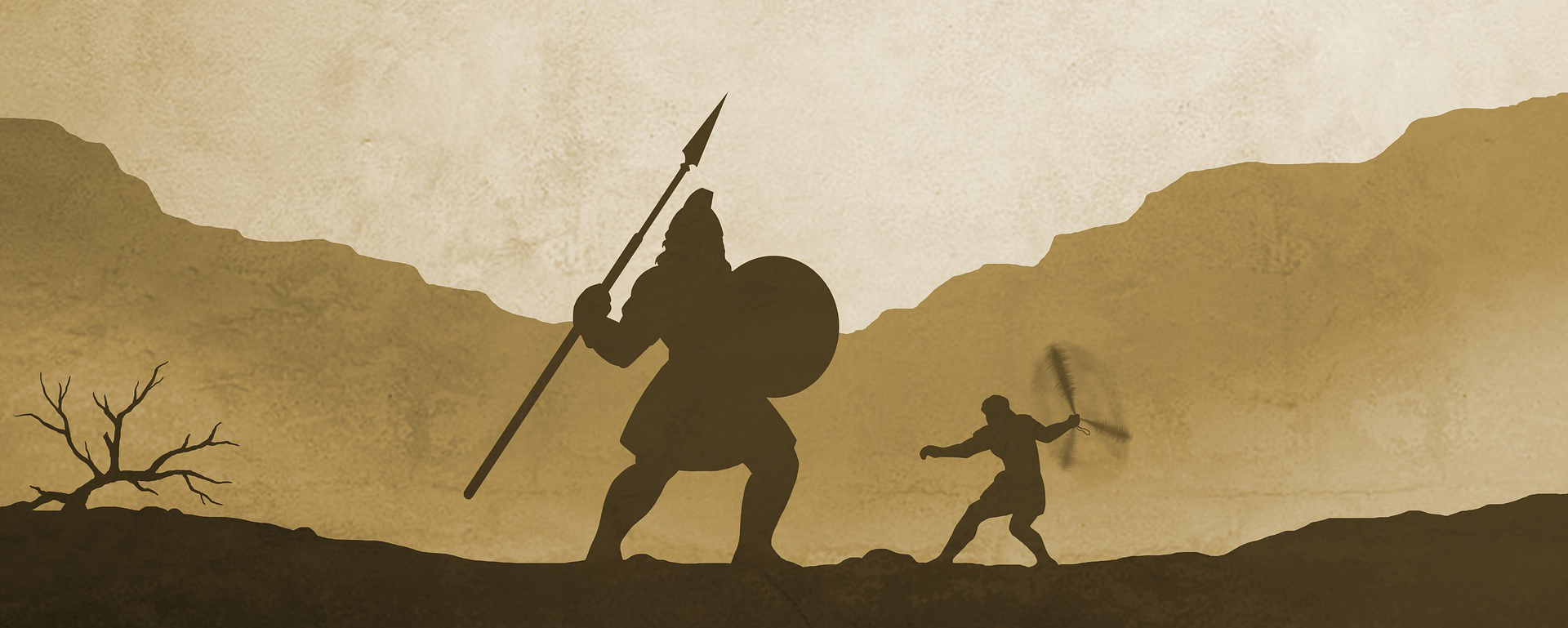
In Isaiah 8, the prophet Isaiah is warned by God about the attitude of the people of his nation, who were worrying about the political unrest around them and the armies which seemed to be targeting Judah for destruction:
“Do not call conspiracy all that this people calls conspiracy, and do not fear what they fear, nor be in dread. But the Lord of hosts, him you shall honor as holy. Let him be your fear, and let him be your dread
Whatever conspiracies the people were concerned about at the time, the image we see is a nation living fear of the wrong things. Searching for answers and promises of safety in all the wrong places, from all the wrong sources — because they have long since stopped seeking them from God. Isaiah describes in this passage the dark nature of life apart from God: a life without hope.
He tells them in v. 13:
But the Lord of hosts, him you shall honor as holy. Let him be your fear, and let him be your dread. And he will become a sanctuary and a stone of offense and a rock of stumbling to both houses of Israel, a trap and a snare to the inhabitants of Jerusalem.
This passage is ultimately fulfilled through the advent of Jesus the Christ (1 Peter 2:7 ) and the coming of his kingdom — a kingdom that would be rejected by the same nation that sought salvation so urgently. Because as the passage says, they stumbled over the stumbling stone. They refused to accept the offer of salvation that Jesus offered, preferring to wait for one that fit their preconceptions or their preferences.
As Paul says in Romans 9:32, they stumbled because they did not seek God in faith. They did not believe his word.
Isaiah calls to the people to turn back to God, whom he says “is hiding his face from the house of Jacob.” He is not blessing the nation because of their sin, because they had been unwilling to truly hear God’s word, to apply it, and trust in it.
And so, in their fear and uncertainty, they were fretting over conspiracies, they sought the guidance of mediums and looked for signs and omens — any hint of the future that would afford them some peace of mind. They looked in every place imaginable except the one which truly held the answers.
Isaiah says in v. 16:
“Bind up the testimony; seal the teachings among my disciples. I will wait for the Lord.”
The Lord’s word has been given, Isaiah told the people, and it will come to pass. And he implored the people: “To the teaching and the testimony!” In other words, what does God’s word tell us? Isaiah pointed the people back — as all the prophets did — to God’s revealed word, where He had told Israel exactly what would happen if they followed His commands, and if they refused.
How could they find security? By doing justice, loving kindness, walking humbly before God (Micah 6:8), and loving the Lord God with all our hearts. And knowing that God had promised to care for His people if they would put their trust in Him and repent of their sin.
He added:
If they will not speak according to this word, it is because they have no dawn.
It doesn’t take much interpretation to understand the point in this statement: They had no hope, no light.
Can you imagine being a nation in fear of impending attack, living under perpetual night? Knowing that there was no light coming, no relief, only continued darkness and fear.
Isaiah’s statement reminds us that the dawn brings hope, it dispels shadow and fear. But not just in a literal sense of the fear of the moment. The predictability of the dawn reminds us of the promise of God, that just as God has ordained the light and dark, the cycle of day and night, so He has ordained the care of His people and the promise that He sees us and watches over us.
Isaiah described the life of those who have abandoned trust in God:
They will pass through the land, greatly distressed and hungry. And when they are hungry, they will be enraged and will speak contemptuously against their king and their God, and turn their faces upward. And they will look to the earth, but behold, distress and darkness, the gloom of anguish. And they will be thrust into thick darkness
Israel looked to the earth, to worldly solutions, to its problems. To idolatry. To human alliances. And all of them failed.
But we can have peace today, just as Isaiah promised them in their time of difficulty, no matter what is going on in the world around us. We don’t have to get wrapped up in politics or fear about disease or violence or unrest that seems to be the world’s default setting of late.
That doesn’t mean God creates a magic barrier around us and never lets anything harmful take place. Isaiah is describing the attitude of someone who goes about his life, takes whatever reasonable precautions he needs to take but not living in fear of consequences beyond that, beyond his immediate control — because that becomes God’s territory. And whatever happens, even if it’s hard, even if it’s painful, we know God is in control of it. And if I am God’s child, I will be delivered in the end.
Isaiah wrote, “Let the Lord be your fear.” And while that sounds harsh in some ways, it’s echoed by Jesus’ statement in Matthew 10:28:
And do not fear those who kill the body but cannot kill the soul. Rather fear him who can destroy both soul and body in hell.
The point is not to live in dread of God. The point is to realize that there is one who holds the ability to truly impact what matters in our lives. If we trust God’s promises, if we look for an inheritance beyond this life, then the only one who can meaningfully impact my eternal destiny is God. It’s His judgment — not the world’s — that matters.
So as we live our lives today, let’s live with confidence. Let’s live like people who listen to God’s word, who trust God’s promises, and ultimately do not fear the worst that this life can bring on our heads.
Because God is with us, and God has redeemed us, and God will deliver us from every evil deed and into his heavenly kingdom, through the stumbling block who has become the chief cornerstone, Jesus the Christ.